Understanding Modern Sensor Technology and Its Applications
Introduction to Advanced Sensor Technology
Sensor technology has become an important part of modern industries, helping machines understand their surroundings and respond to different situations. From manufacturing and robotics to transportation and smart infrastructure, sensors collect useful information that supports automation and improves operational efficiency. As technology continues to advance, the need for accurate object measurement, environmental monitoring, and real-time data collection is growing. Sensors make it possible to detect movement, identify objects, measure distances, and understand spatial environments. These capabilities are helping businesses improve safety, productivity, and the overall performance of their automated systems.
Understanding the Working of Modern Detection Systems
Detection systems are designed to identify objects, measure their position, and provide information about their surroundings. Depending on the application, these systems may use light, sound waves, electromagnetic signals, or other sensing methods. The collected information is converted into data that machines or computer systems can process. This allows automated equipment to make decisions based on changing environmental conditions. Detection technology is particularly useful in applications where accuracy and quick responses are important. From identifying obstacles to monitoring production activities, modern sensors support reliable operations across several technical and industrial environments.
Exploring the Importance of Three-Dimensional Measurement
Three-dimensional measurement has changed the way machines understand physical environments. Instead of collecting information about only one surface or distance, advanced sensing systems can capture spatial details and create a more complete representation of surrounding objects. This information is useful for navigation, inspection, mapping, and industrial automation. 3D lidar sensors are an important part of this technological development. They use laser light to measure distances and collect information about the shape and position of objects. By processing reflected light signals, these sensors can generate detailed point cloud data that helps machines understand their surroundings with greater precision.
How LiDAR Technology Supports Industrial Applications
LiDAR technology is widely used in applications that require accurate distance measurement and environmental mapping. In autonomous navigation, it helps systems identify nearby objects and understand the layout of their surroundings. In industrial environments, it can support automated inspection, warehouse management, and equipment monitoring. Construction and surveying activities can also benefit from three-dimensional scanning because it provides detailed spatial information. The quality of the collected data depends on factors such as sensor resolution, measurement range, environmental conditions, and system configuration. Selecting suitable technology for a particular application is therefore essential for achieving dependable results.
Understanding the Role of Object Detection Systems
Object detection is another important area of modern sensing technology. It allows machines to recognise the presence of objects and respond according to their position or movement. An object detection sensor can be used in automated production lines, security systems, robotics, and material handling equipment. Depending on its design, it may detect objects using infrared light, ultrasonic waves, laser technology, or other sensing methods. These devices help reduce manual monitoring and improve the consistency of industrial processes. Their ability to identify objects quickly makes them valuable in environments where automated responses and operational safety are important.
Applications Across Different Industries
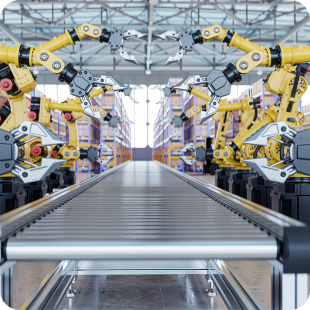
Modern sensing solutions are used across a wide range of industries because they help improve accuracy and efficiency. In manufacturing, sensors can identify products on conveyor belts, monitor machine operations, and support quality inspection. In robotics, they help machines detect obstacles and interact with surrounding objects. Transportation systems use sensing technology to support navigation and improve awareness of nearby vehicles or obstacles. Smart buildings can also use sensors for automated access control, occupancy monitoring, and security applications. As industries adopt more automated processes, the importance of dependable sensing systems continues to increase.
Factors to Consider When Selecting Sensor Technology
Choosing the right sensor requires an understanding of the application's technical requirements. Measurement range, accuracy, response time, detection capabilities, and environmental conditions should all be considered before making a decision. For example, a sensor used in an outdoor environment may need protection against dust, moisture, and changing lighting conditions. Similarly, industrial applications may require equipment that can operate continuously with minimal maintenance. Compatibility with existing control systems and data processing software is another important consideration. Evaluating these factors helps businesses select suitable sensing solutions and achieve better performance over time.
Conclusion
Advanced sensing technology is transforming the way machines interact with physical environments. From three-dimensional mapping to automated object recognition, these solutions are helping industries improve productivity, accuracy, and safety. As automation becomes more common, the demand for reliable measurement and detection capabilities will continue to grow. Understanding the working principles, applications, and technical requirements of modern sensors can help businesses make informed decisions. Investing in suitable sensing technology can support smarter operations, better monitoring, and more efficient industrial processes while preparing organisations for future technological developments.
Comments
Post a Comment